Now that we’d learned (the hard way) that the proper ratio of drakes to ducks is about 1:6 or 1:8—and that my family could safely enjoy cooking duck eggs around me without triggering an allergic reaction—we decided it was time to maximize our duck egg production.
At the time, our duck gang consisted of one drake and three females, so we were ready to add another three to five ducks.
We didn’t want to buy straight run again—with our luck, we would end up with a bunch of drakes—but after checking prices at a local store and seeing that female ducks were twenty dollars apiece, we didn’t want to go that route either.
So, we decided to invest in an incubator.
For roughly the cost of four female ducks, we could hatch our own eggs, turn the whole thing into a hands-on science project, and sell or give away any ducks beyond our capacity.
I even turned to ChatGPT to figure out how many eggs to incubate to statistically land in that three-to-five female range.
Then a friend mentioned she’d love a few females, too, so our goal shifted to five to eight ducks total—which meant we might as well fill up the incubator’s eighteen-egg capacity.
So we did.
For the next seven days, we collected our usual three eggs a day—though, of course, this was the week one duck decided to skip two days. It took the full week to gather all eighteen.
Finally, on March 18, it was time.
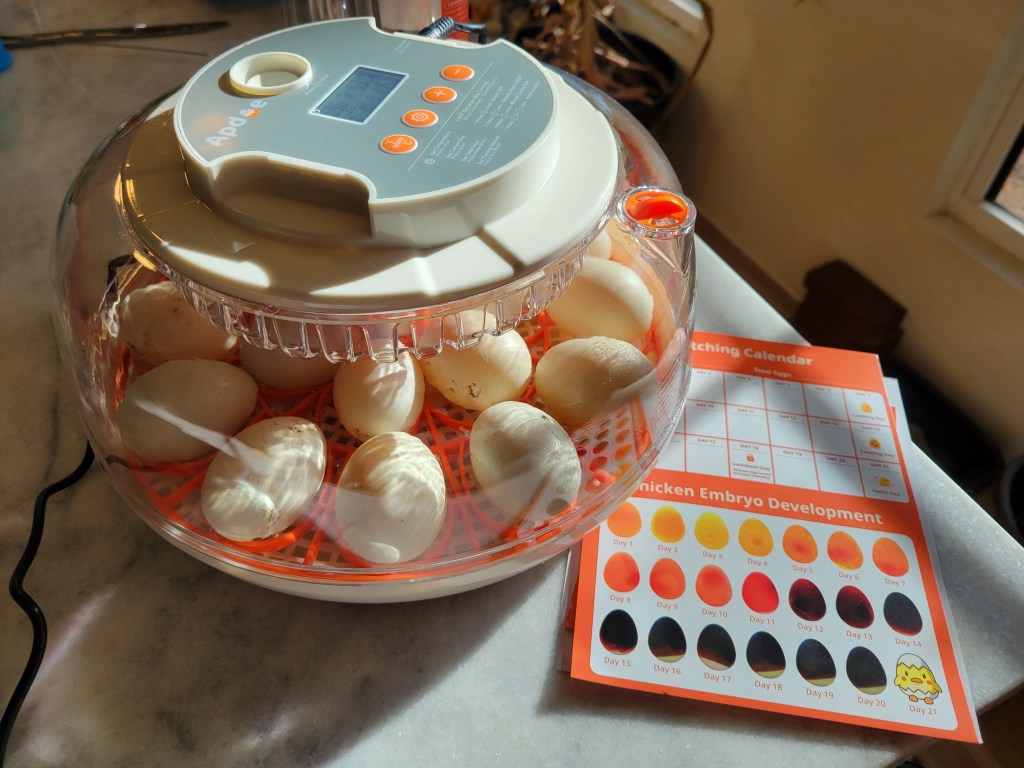
My husband set up the incubator, filled the water reservoir, and dialed everything in: 99.5°F and about 50% humidity.
And then…we waited.
We checked (most) every day, ensuring the temperature and humidity held steady and, perhaps most importantly, that the incubator was still plugged in and running.
We had opted for the incubator with automatic turning so it was fun to watch the plate carefully rotate, turning each egg every couple of hours.
A couple weeks in, we left for an out-of-state trip to visit family. The timing wasn’t ideal as far as these little eggs went, but a friend (the same one hoping for a few ducks) graciously agreed to check on the incubator daily—monitoring temperature, humidity, and power. (More on that trip coming later in May.)
We came home on Saturday, April 11 to find that the incubator had entered lockdown right on schedule—no more turning—and one of the eggs was rocking!
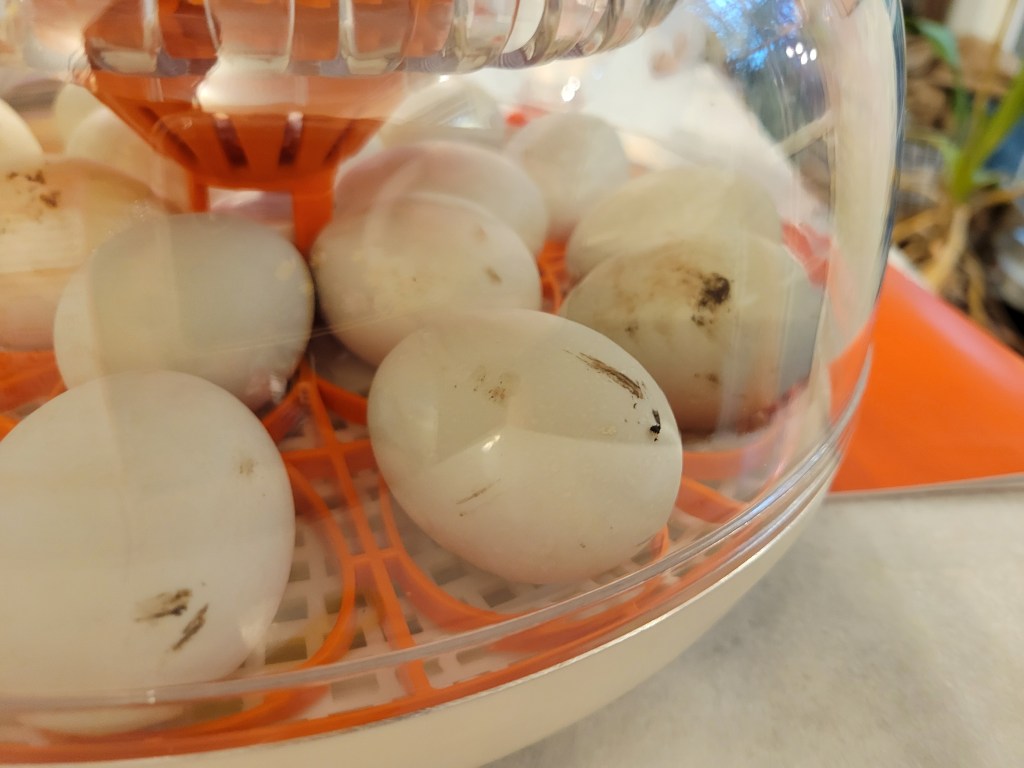
It was time to crank up the humidity. My son filled both water reservoirs, aiming 65%-75% humidity now—and we began watching closely for pipping: the first visible cracks as a duckling begins to break through the shell.
On Sunday, three eggs were rocking, but there were still no visible cracks.
By Tuesday, we spotted them: tiny punctures and hairline fractures in at least four eggs. Progress. Slow, but unmistakable.
By Wednesday morning…not much had changed. Plenty of pips, but no hatches yet, and I was starting to get nervous.
Then shortly after noon, my younger son and I heard it.
“Pss, pss.”
We looked at each other.
It sounded exactly like our little gosling—but I was pretty sure he’d been put back out in the shed. My son looked just as confused…and then suddenly took off running.
Seconds later, he came flying back across the house, feet pounding against the floor.
“Mom! It’s a duckling!! You have to come see!”
Well, that got me moving.
My daughter and I raced across the house, following him to the incubator.
And there it was.
Our first duckling.
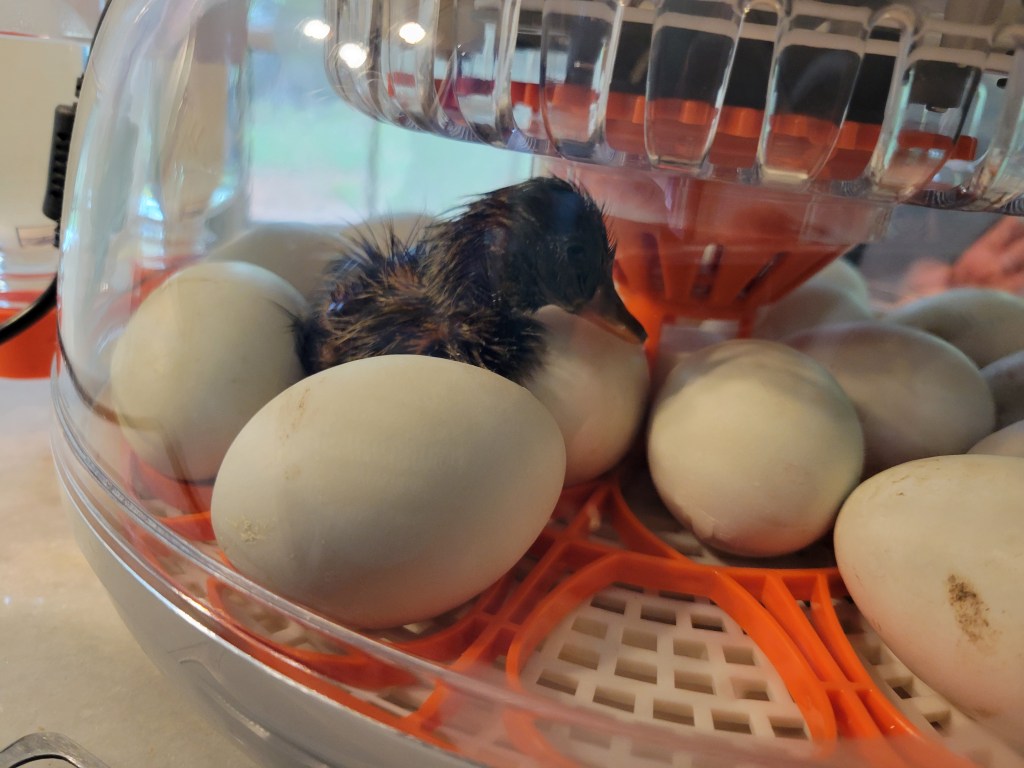
It was absolutely surreal. The miracle of life is astounding every single time. It never gets old.
By bedtime, two more had joined it. By morning, the number had doubled.
Six ducklings. Wow.
The hardest part, honestly, was leaving them in the incubator long enough to fully dry and steady themselves. But by then, the first three were ready for the brooder, so my husband briefly opened the incubator for me to move them. The other three stayed behind to finish drying and gain strength.
And then we waited again.
Eleven eggs remained.
Statistically, we expected to lose three to five—but that still left a likely six to eight more.
Over the course of the day, two more ducklings hatched. By bedtime on Day 2, we had eight ducklings—plus one very large gosling—in the brooder.
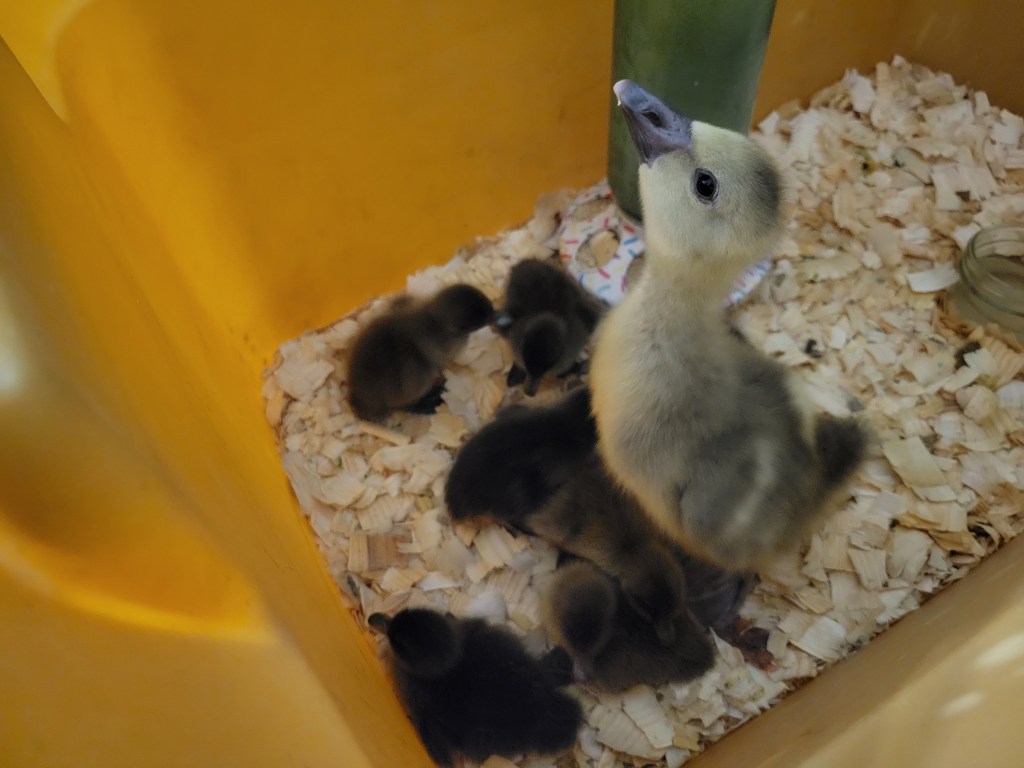
Overnight, I was surprised to find that no more had hatched. We’d seen pipping in at least seven eggs, and a couple looked especially promising.
But by 9AM, two more were fully out, with another two well on their way.
At 10:30AM, I checked again—only to find a surprise third duckling, from neither of the eggs I had been watching most closely.
By evening, duckling number twelve had hatched.
Another one looked close behind, so we left all four remaining ducklings in the incubator overnight to avoid disrupting the process.
By the morning of Day 4, though, it still had not fully hatched. It was clearly trying—but making slow progress.
That day, we had family coming over, and our house was…well, smelly. The children were tasked with moving the eight ducklings and the gosling from the indoor brooder to the outdoor one—as well as airing out the house.
By late afternoon,we were getting concerned. The struggling duckling seemed to be exhausting itself.
My sister-in-law—who has experience hatching chicks—offered to help.
So we opened the incubator and she showed me what to do.
First, we removed the four ducklings who had been not-so-patiently waiting their turn for the brooder. I had hoped their presence might encourage the struggling one, but at this point, they needed space—and access to food and water.
Then she carefully wrapped the duckling in a warm, damp towel and gently flaked away loose shell, being careful not to disturb the inner membrane.
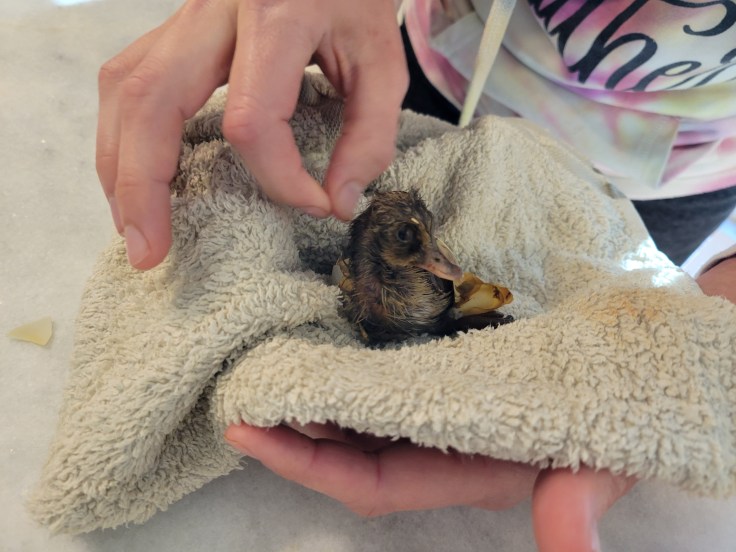
We placed it back in the incubator and watched closely.
Later, when it was still struggling, we repeated the process—this time, returning it with a warm, damp washcloth to help keep things from drying out.
Finally, the little duckling freed itself.
But it was exhausted.
Its legs were stiff and weak. I knew it wasn’t out of the woods yet.
There wasn’t much left to do but wait. My husband even tried to help it stand once—but it immediately toppled over.
On Day 5—Sunday—I woke up at 4AM.
I tried to go back to sleep, but to no avail, so I went to check on the ducklings.
The four in the indoor brooder were doing just fine—though my sudden appearance sent them scrambling (or rather, waddling) behind the waterer.
I braced myself as I walked to the incubator and flipped on the kitchen light.
The duckling was still.
I sighed.
Then it moved.
Within minutes of me talking to it, it began to sit up and shift around. Its legs were still weak, but it was still trying. Still fighting.
I noticed it wasn’t very dry or fluffy—but as I stood there, it began to fluff up more and more.
I decided that once the sun came up, I’d move the indoor ducklings outside to join the others—and then give the struggling one a space of its own.
The next 12 hours would be very telling.
Would it get stronger?
Or would it fail to thrive?
I had done everything I knew to do.
Meanwhile, four eggs still remained in the incubator. We’d seen two of them rocking the night before, so I wasn’t ready to give up hope—but as time passed with no visible progress, that hope started to fade.
Later that morning, during chores, I made a different call.
I moved it into the indoor brooder—with the others.
We were nearby and could keep a close eye on them, and I hoped the company might help.
It did.
As I watched it stumble after the others, trying so hard to keep up, I realized I had lost track somewhere along the way. I had gotten it into my head that this was duckling number twelve—but it wasn’t.
It was #13.
Of course it was.
The one that struggled. The one that almost didn’t make it. The one that still might not.
And yet…against the odds, it had made it this far.
And I decided it was lucky.
Lucky 13.
Before we left for church, though, we separated them again—moving the group outside and leaving Lucky 13 alone inside so it wouldn’t be at risk without supervision.
When we got home, we checked on Lucky 13.
It was sitting more than standing—still weak—but alert…and very, very lonely.
It called and called for the others.
So, against the usual advice, we made the call.
We moved Lucky 13 in with its hatchmates.
It was exactly what it needed.
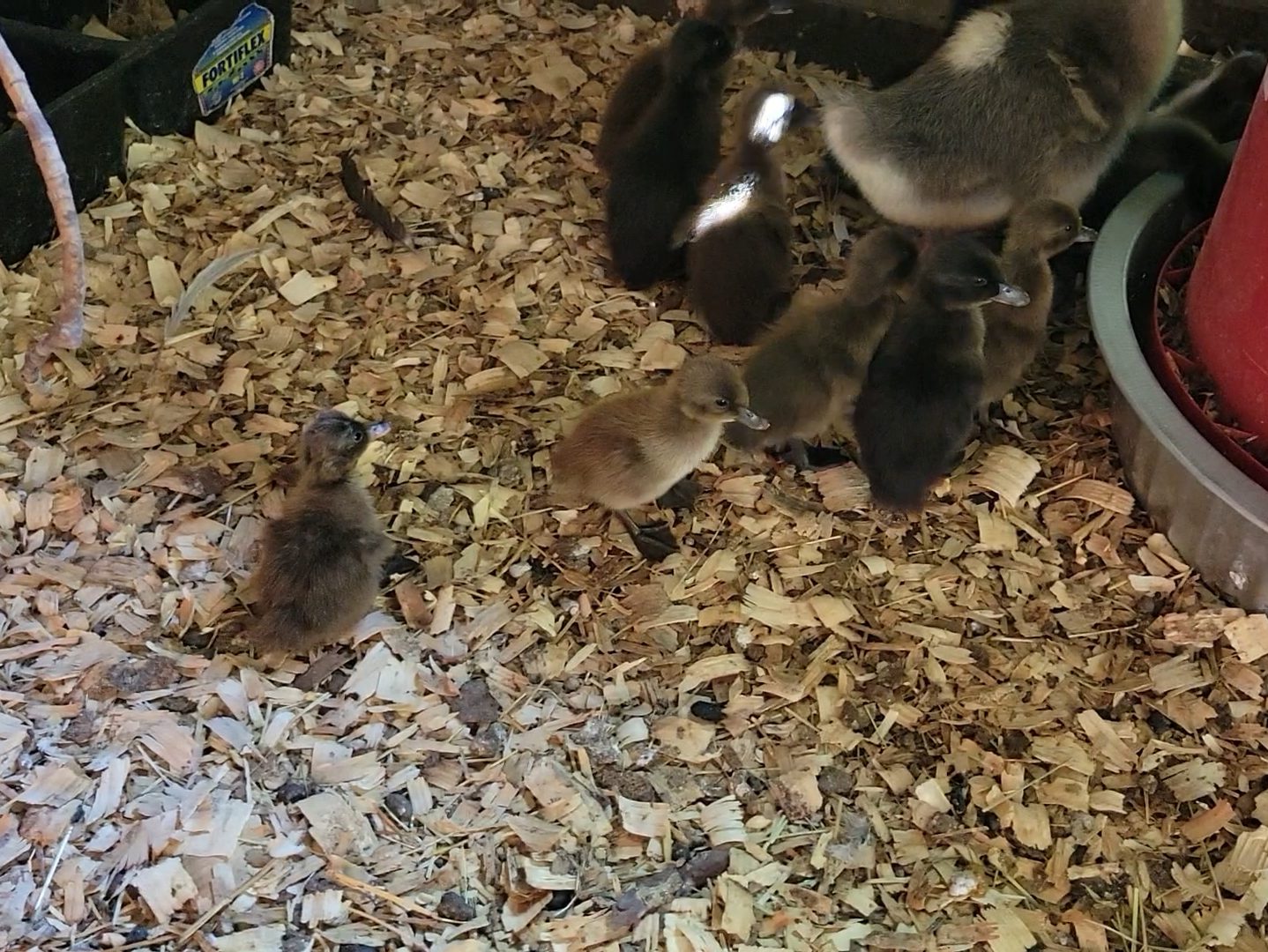
It lagged behind, but it followed them everywhere—and slowly, steadily, its legs grew stronger.
At the same time, we checked the remaining four eggs.
There had been no progress.
As much as I hated it, it was time to accept the truth: these weren’t viable.
Cleaning out the incubator was, without question, the worst part of the entire process—and I am very grateful my husband took on that job.
Now, with the incubator stored away for a future season and the indoor brooder packed up, the house feels more open…and a lot quieter.
What a ride.
In just one month, we went from collecting eggs to watching thirteen little lives begin—right in front of us.
Then on Monday afternoon, as I did the rounds to check on the animals, I saw that Lucky 13 had taken a downturn.
Not long after, our gosling sounded the alarm, calling out until we came, to let us know that Lucky 13 didn’t make it.
He fought hard, but this is part of hatching too, sometimes.
It’s easy to get weighed down by the sadness.
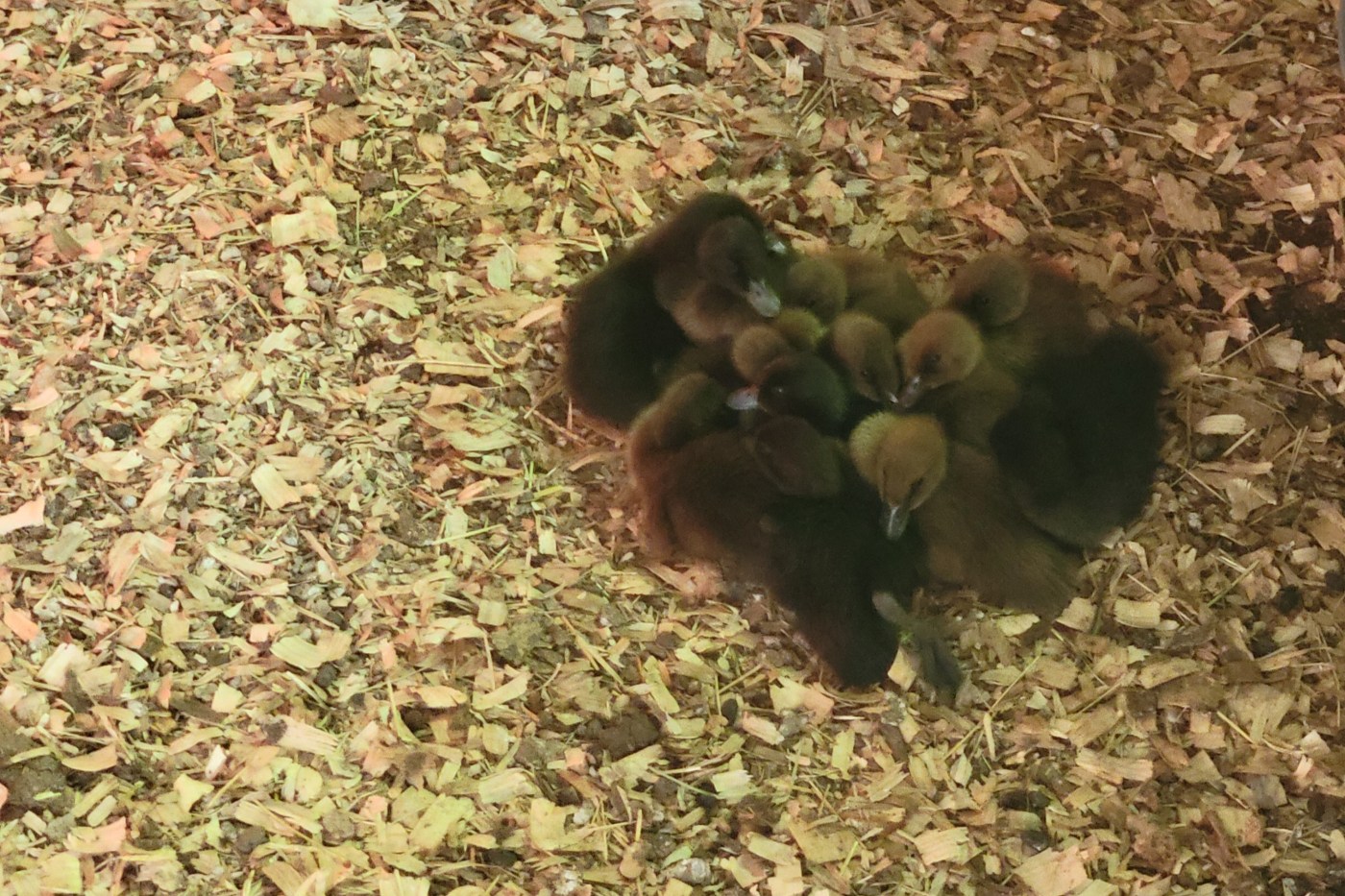
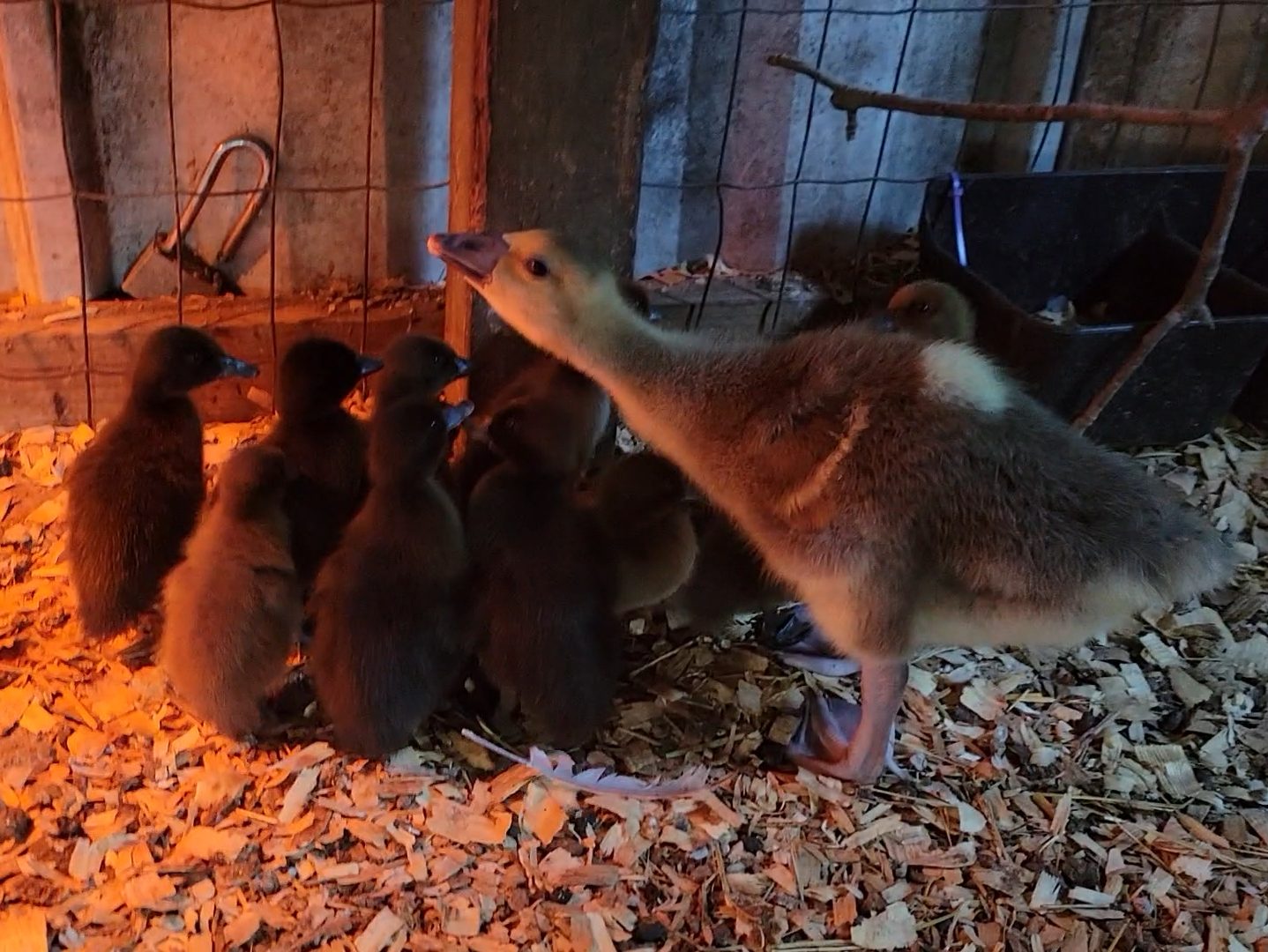
But just outside, twelve little ducklings—and their gosling protector—are thriving.
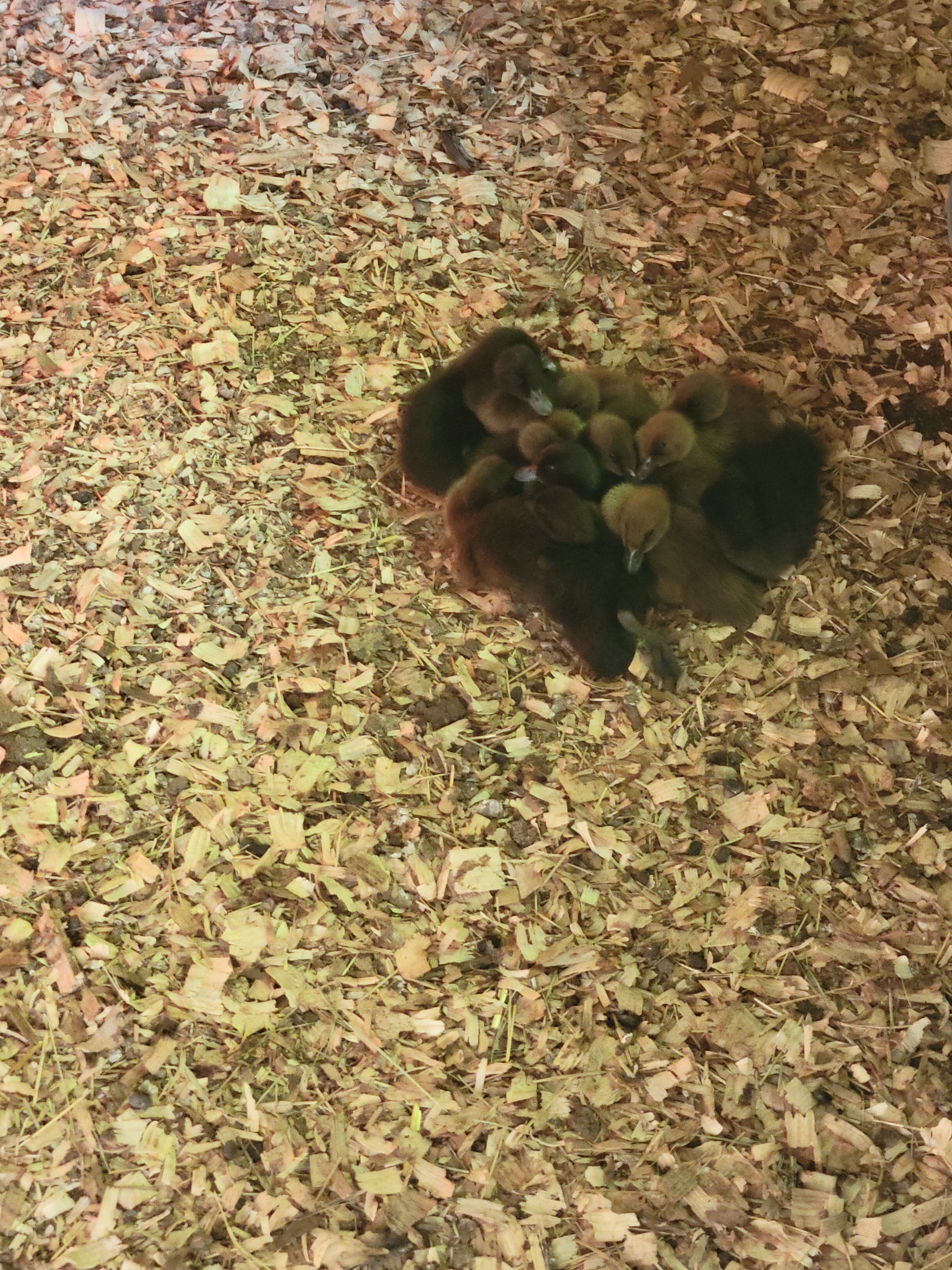
Everywhere he leads, they follow—and come naptime, they gather into a soft, downy heap, sometimes even sleeping on top of him.
And somehow, life marches on.
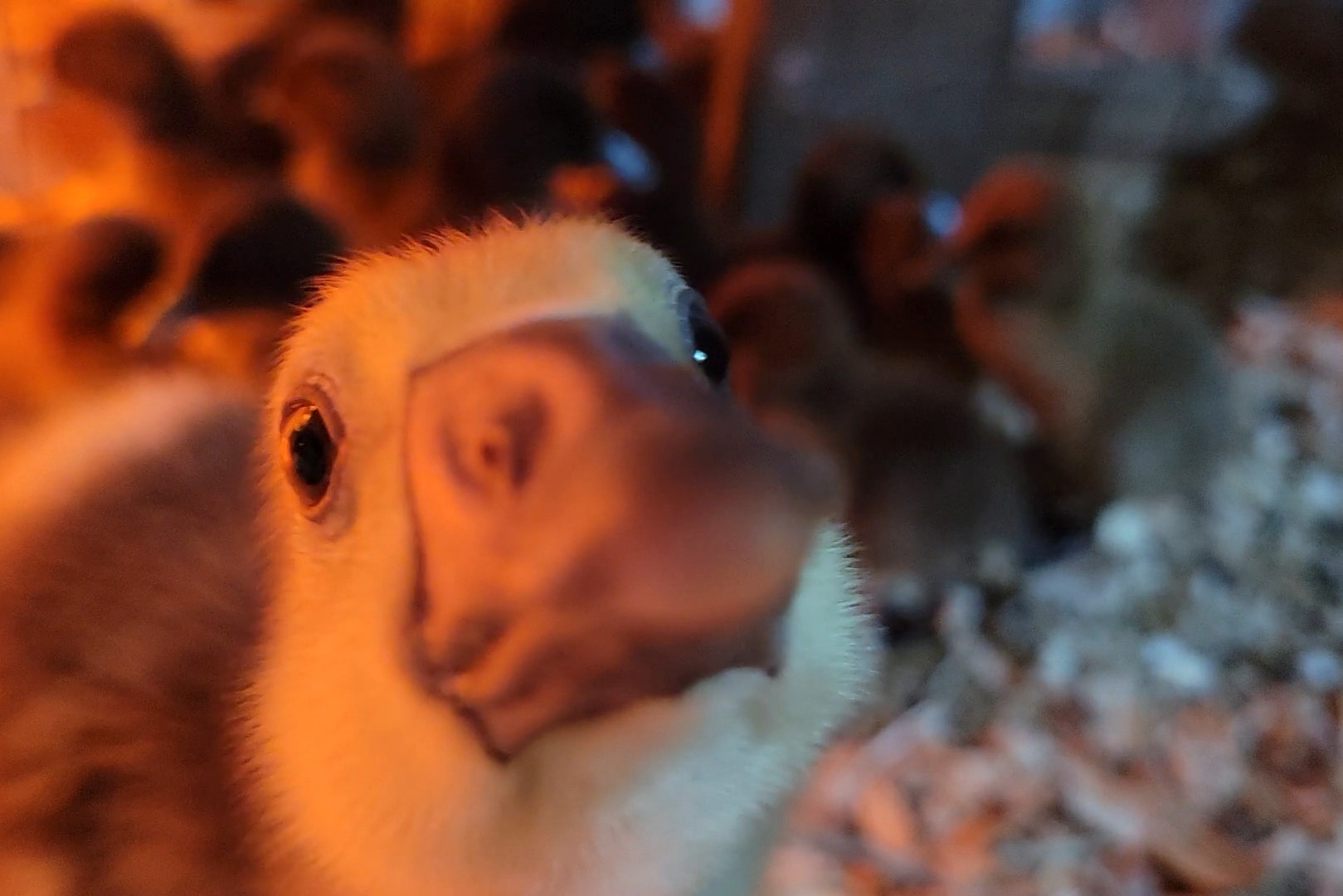
Just like that, spring is in full swing—and I’ll give you a glimpse of what that looks like in A Day in the Life – Spring Edition.

